

🎤 Quotable quotes: “If that's a joke, I love it. If not, can't wait to unpack that with you later."
— Ted Lasso
One of the ideas we often talk about in our keynotes and workshops is something called being nose blind. And yes, it's exactly what it sounds like.
You know that thing where you walk into someone's house and immediately notice a smell? Maybe it's dinner cooking. A dog. A candle. Teenagers. Whatever it is, you notice it immediately.
The people who live there? Nothing.
There's actually a name for this: olfactory adaptation. When we're exposed to something long enough, our brains decide it isn't particularly interesting anymore and stop calling our attention to it. Most of us just call it becoming nose blind.
We think the same thing happens in our lives, our workplaces, and our leadership.
And, naturally, that got us thinking about Ted Lasso.
🏟 Why This Matters for You
Think about AFC Richmond before Ted arrived. They already had a way of doing things. There was a hierarchy, routines, personalities, and plenty of unwritten rules about who mattered and who didn't.
Then this relentlessly optimistic American showed up knowing approximately nothing about football.
That should have been a disadvantage. In a strange way, it became one of Ted's superpowers.
Ted wasn't nose blind yet.
He noticed the kit man everyone else walked past. He noticed that Roy's influence extended far beyond what happened on the pitch. He saw something in Jamie beyond the swagger. He recognized that Rebecca wasn't simply the intimidating owner upstairs.
And he asked questions that probably seemed ridiculous to people who had spent their entire lives around football.
Ted saw things differently because they were still new enough for him to see.
👃 The Trouble With "That's How We Do It"
Every organization develops habits. So does every family, every team, and every person.
A lot of those habits are good. They're part of what creates culture and consistency. But every once in a while, there's value in asking a slightly uncomfortable question:
Why exactly do we do it this way?
Sometimes there's a great answer.
And sometimes the answer is, "Because that's how we've always done it."
That's nose blindness.
It's when we become really good at executing the routine without stopping to ask whether the routine is still accomplishing what it was created to accomplish.
Maybe it's a meeting nobody needs anymore. Maybe it's the way your family communicates. Maybe it's an assumption you've made about a colleague. Or maybe it's a story you've been telling yourself for years about what you're good at, what you're bad at, or what you're capable of becoming.
Familiarity can be comforting.
It can also make things invisible.
🐕 Enter the Diamond Dogs
There's another reason Ted didn't have to figure everything out himself.
He had people around him. Beard, Higgins, Roy, Keeley, Rebecca, and eventually an entire pack of Diamond Dogs. They challenged assumptions, offered different perspectives, and occasionally pointed out something that had become painfully obvious to everyone except the person experiencing it.
That's an important part of avoiding nose blindness.
We need people who smell things we don't.
Metaphorically, please.
It might be a colleague, a mentor, a friend, a spouse, a coach, or the newest person on the team. Sometimes the greatest value another person brings isn't a solution. It's simply helping us see something we've stopped seeing.
That's why outside perspectives matter. They interrupt the pattern long enough for the invisible to become visible again.
🔎 The Nose Blind Test
So this week, we'd challenge you to ask three questions.
Where have I become nose blind? What have I personally stopped questioning simply because I've become accustomed to it?
Where have we become nose blind? What does our team, company, school, or family keep doing because it's simply "what we do"?
And maybe the most important one: Who experiences our world differently than we do?
The newest employee. The customer. The intern. The student. The person who doesn't look, think, work, or communicate exactly like everyone else.
They might notice something the rest of us can no longer smell. Er... see.
You get the idea.
🏁 Final Thought
Leadership often gets associated with creating something new. A new strategy, a new initiative, a new process, a new big idea.
But sometimes the greatest act of leadership isn't creating something new at all.
It's noticing something everyone else has stopped noticing.
Ted arrived at Richmond knowing almost nothing about football. And because of that, he saw things the football experts couldn't.
So every once in a while, open the windows. Invite in some fresh air. Ask a ridiculous question. Listen to the new person.
And make sure you haven't gone nose blind.
— Nick & Marnie
Your tea sipping, assumption sniffing, fresh air seeking friends
More leadership musings
🍪 Biscuits with the Boss:
Icebreaker time:
What's something your team does today simply because "that's how we've always done it"?
Then ask the slightly harder question:
If we were starting from scratch today, would we still do it that way?
Bonus points if you ask the newest person in the room first.
🌎 This week in Here - There - Every F’ing where
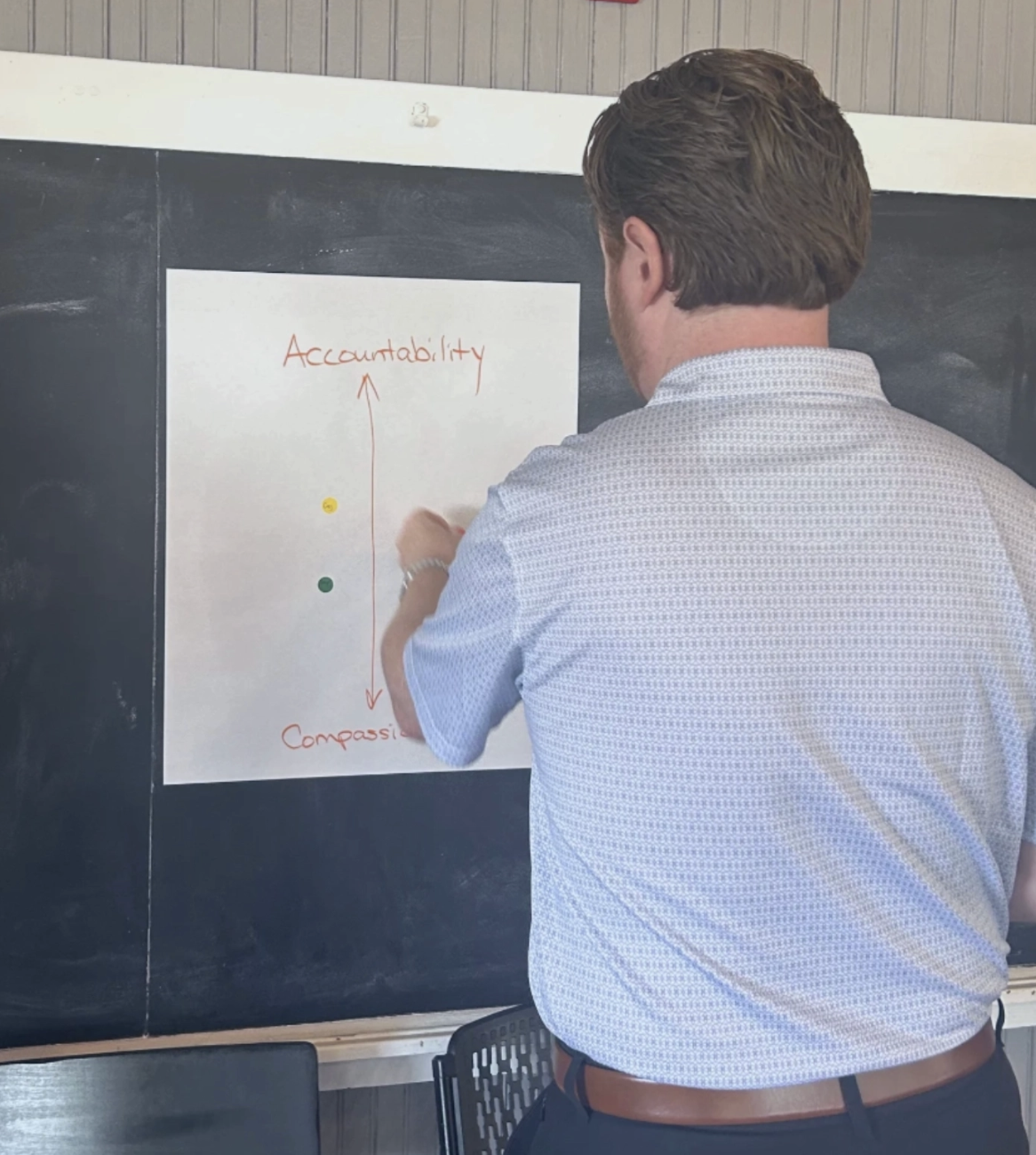
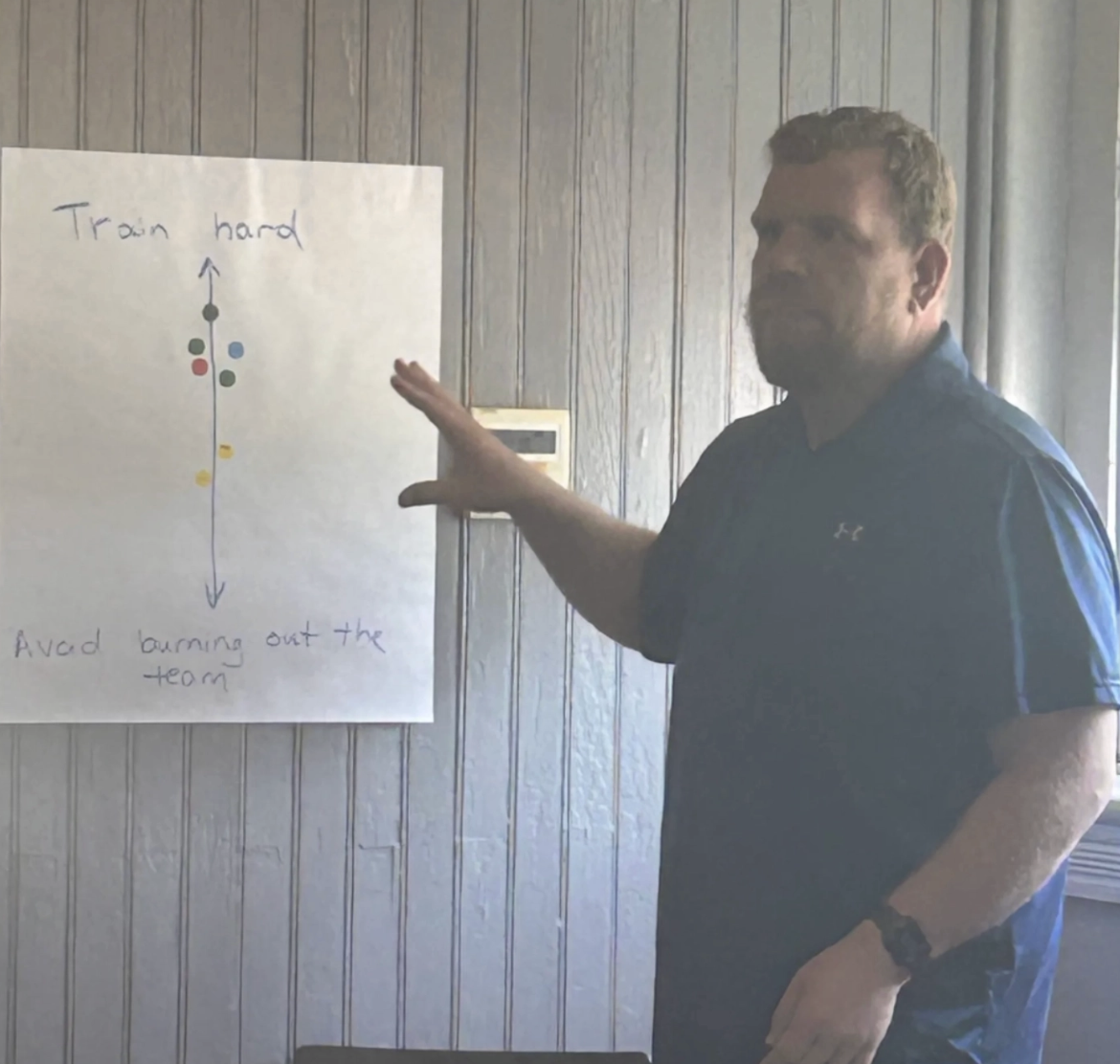
Choptank Electric learns to Lead It Like Lasso (in a not so well lit room :) ). Here they are discussing where the leaders in the room land on the Dichotomies of Leadership spectrums. (Jocko Wilnik and Leif Babin wrote the book on it)
Believe!
Nick & Marnie
|
||||||

Responses